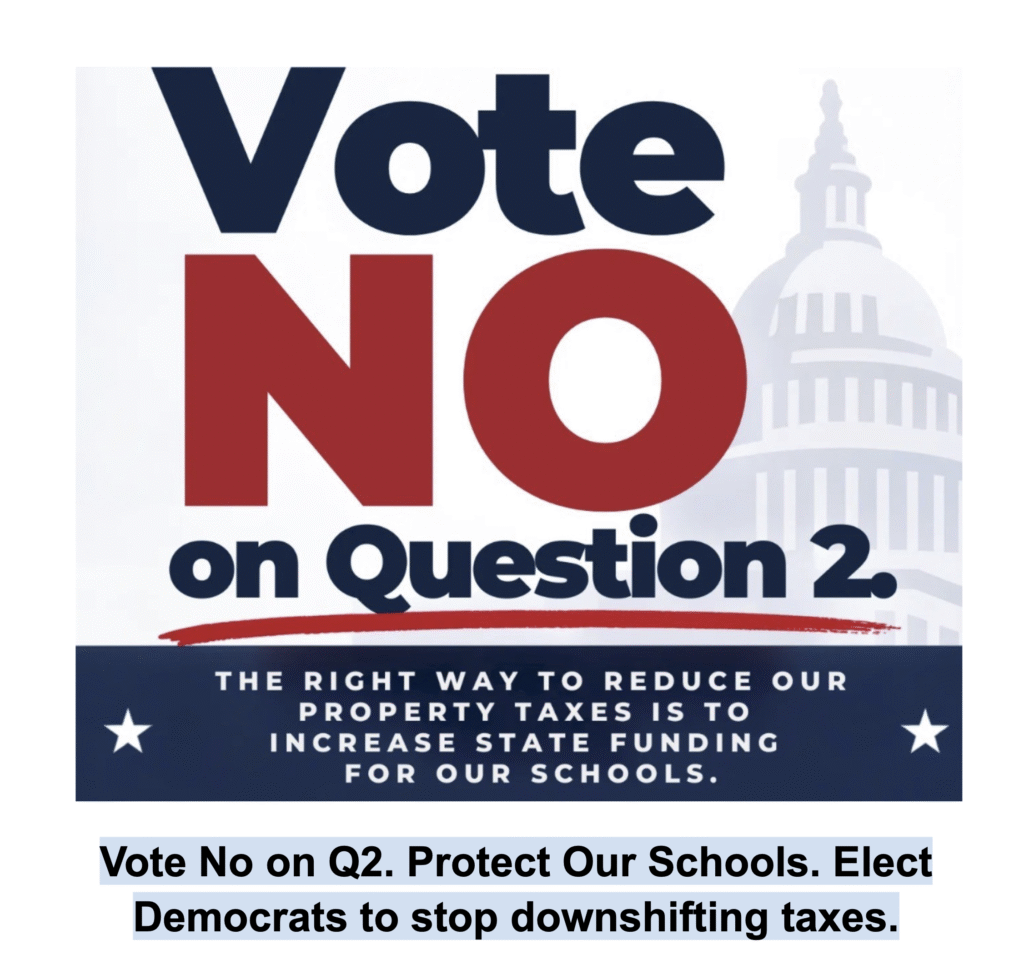
Why Question 2 ( & HB 1300) is misleading 

The Republicans have been in control of the state, all 3 branches, for 6 years. In their ongoing crusade to dismantle our public schools, Republicans have withheld state funding. (Instead, they’ve given vouchers for private education and tax breaks to wealthy individuals and corporations. They repeatedly slashed business taxes and refused federal grants.) NH is last in the nation in the share of state funds it commits to education. This means the burden falls more heavily on local property taxpayers every year. 

GOP leaders blame schools for spending too much, when the real problem is that the state spends too little. If voters in a school district approve the ballot measure, it will harm schools further by forcing local cuts. The text on the ballot promises that this won’t affect classroom instruction and school-based services—but in some cases there may be nothing else left to eliminate. Despite the false promise, no one can predict the impact this measure will have on actual school programs.

Why your property taxes are so high 

  1. It’s not because school boards are on a spending spree. Since 2007, the state’s share of paying for public education here has dropped from about 35% to under 26%. That’s not a typo — the state used to cover more than a third of the bill and now covers about a quarter. Guess who picked up the difference? Local property taxes, which have climbed from 54% to over 63% of school funding over that same stretch. Special ed is even worse — local property taxpayers are covering over 83% of those costs even though the state is legally supposed to be funding that.
  2. So when this cap says the local levy can only grow with inflation and new construction, here’s the part nobody’s saying out loud: it doesn’t account for the state cutting its share again. And the state has been doing exactly that — a program that used to cushion towns from losing aid (Hold Harmless) is being phased out right now, and 145 towns already saw less state money this year alone. If that keeps happening while our local levy is frozen, the money has to come from somewhere, and “somewhere” means cutting staff, programs, or services — because we legally won’t be able to raise the local match to cover it without another supermajority vote.
  3. A couple more things worth knowing before you vote. This isn’t the old town-meeting tax cap process where you can vote to undo it later if it’s not working. Once this passes, it appears to lock in for two full years with no off-ramp.
    1. It bypasses the existing local process entirely — a process only 2 out of 162 districts in the whole state have ever successfully used — and puts a state-written question on every single ballot instead, whether your town asked for it or not.
    2. One of the bill’s own sponsors has said part of the point was to drive turnout for the general election. This isn’t the neutral, apolitical “let’s all agree taxes shouldn’t rise too fast” question it’s being sold as.

Ballot measure text (based on HB 1300) 

“Shall the [name of municipality] limit property tax growth for [name(s) of school district(s)] under RSA 32:5-i. If adopted for a two-year period: (1) the local property tax levy may not grow beyond the prior year’s amount, adjusted for inflation and new construction; (2) SAU central office spending may not exceed 6 percent of total school district appropriations; and (3) bonded capital costs are excluded from both limits. These caps apply only to administrative operations of the SAU central office and do not affect classroom instruction, school-based services, or other municipal expenditures. These limits may be overridden as provided in RSA 32:5-i. Adoption requires a three-fifths (3/5) majority vote.”

Credit to “https://www.mascomaforward.com/NOCAP” for Ballot Q2 related content of this page.

Cheshire County Democrats Gather Monthly

Each month we welcome topic speakers, and hear reports from our local representatives and committee members. Our meetings are held on the first Tuesday of each month AND can be accessed via Zoom. Subscribe to receive notifications!

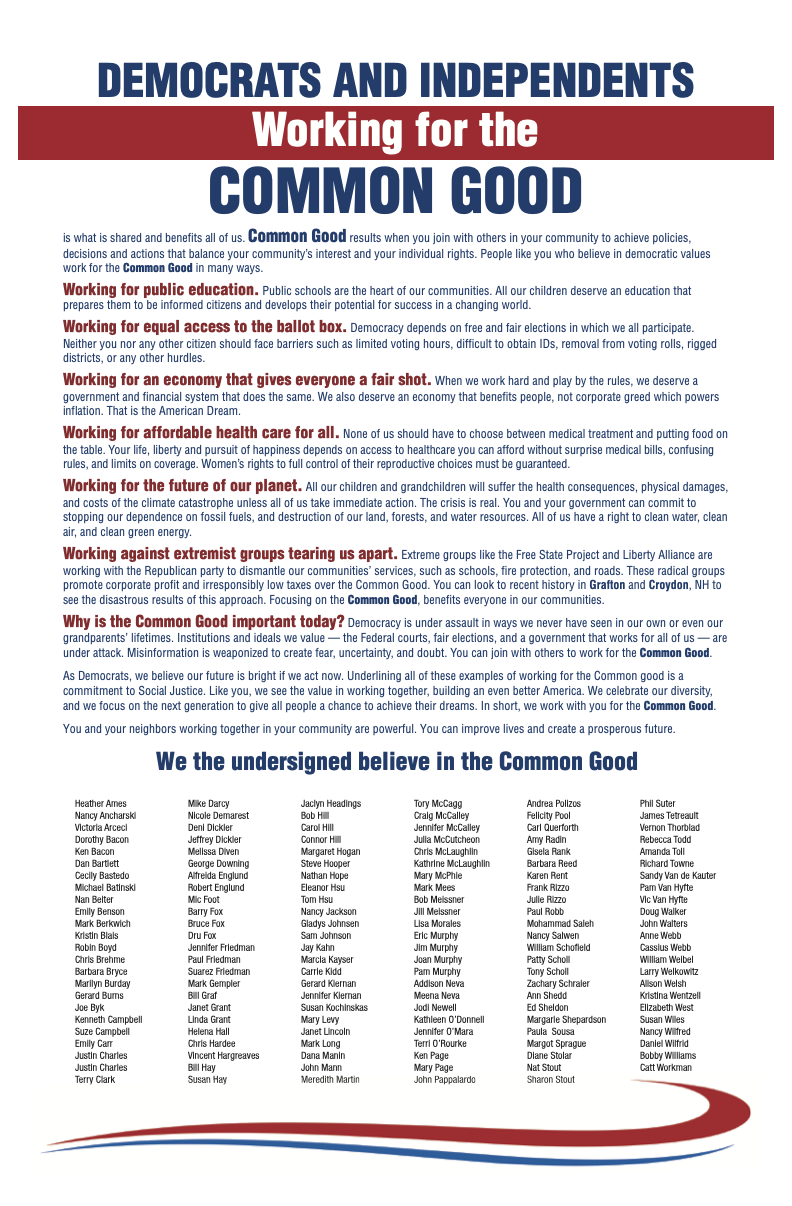
It Takes Everyone to Make Change

Volunteer your time with CCD

Want to share your special talent? Let us know how and help us build a stronger democratic community.

Volunteer for Canvassing

Outreach to your community is the best way to connect with people. Let’s learn what is on the minds of our neighbors.

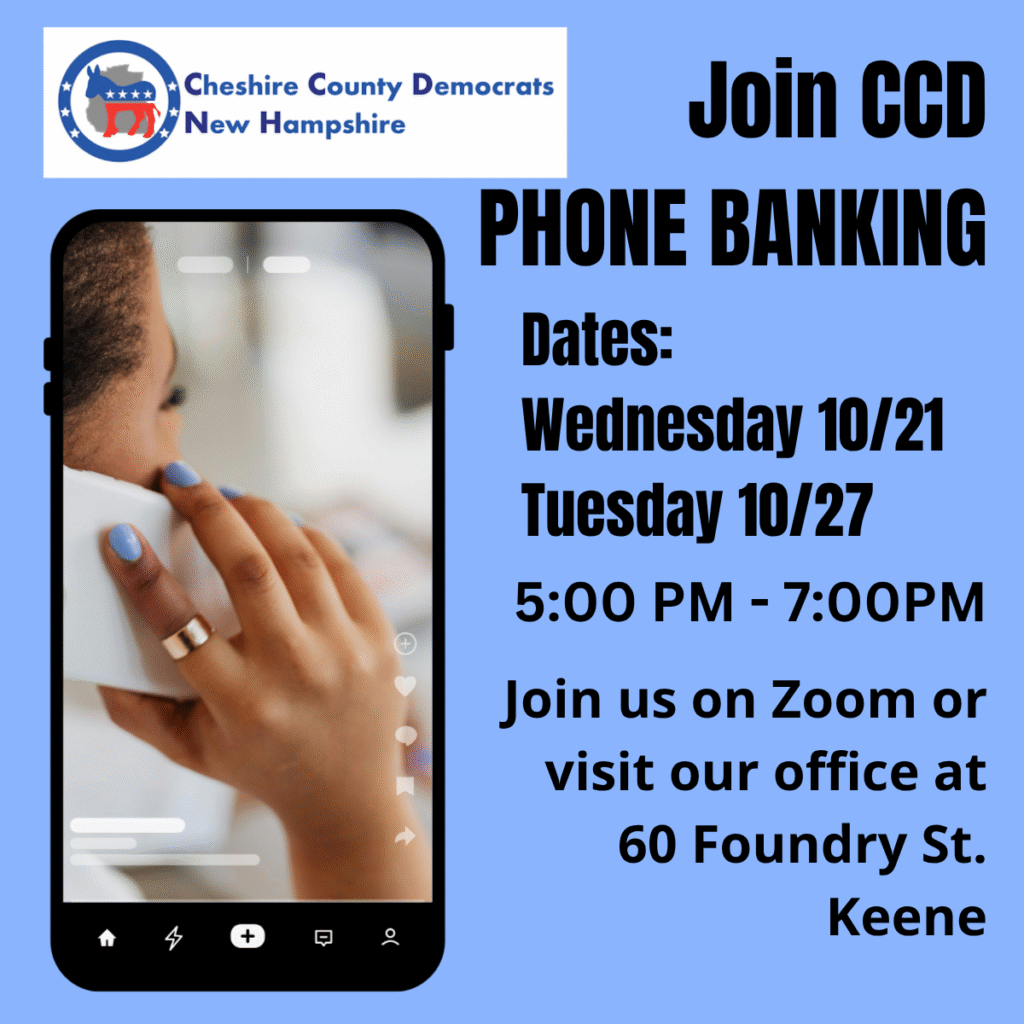
Volunteer to Phonebank

What to talk to community members? Sign up here to learn what issues are on your neighbors’ minds.